














Generic selectors
Exact matches only
Search in title
Search in content
Post Type Selectors

CUSTOM EDI INTEGRATION SOLUTION

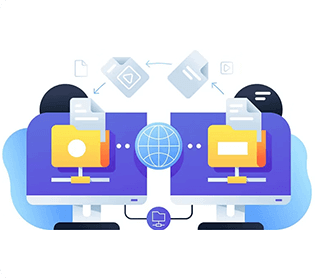
OSP provides custom healthcare EDI integration services for provider, payer, clearinghouse, RCM, billing, and healthtech teams that need existing applications connected with trading partners. We scope the systems, X12 transactions, partner requirements, mapping rules, connection method, validation, testing, and operational ownership the exchange needs.

Our work connects PM and billing applications, RCM platforms, payer or clearinghouse endpoints, and other healthcare systems through transactions such as eligibility (270/271), claims (837), claim status (276/277), remittance (835), prior authorization or referral (278), and enrollment or premium payment (834/820), where relevant. Supported transactions, versions, implementation guides, connectivity, and production access are confirmed during discovery. X12 covers many administrative exchanges, while HL7 and FHIR serve different clinical information needs. When you need a complete EDI software product rather than a connection project, we route that work to our EDI software development offering.

Solution
SCOPE YOUR HEALTHCARE EDI INTEGRATION

EXPLORE EDI INTEGRATION SERVICES

OSP builds healthcare EDI integrations around your transaction flows, trading partners, systems, and operational requirements. Our approach supports established X12 exchanges alongside modern integration patterns where EDI transactions connect with API-enabled healthcare applications and real-time workflows.

Healthcare organizations often work with multiple applications that structure information differently, while each trading partner may also have specific transaction requirements. OSP helps bridge these differences through structured EDI data mapping and transformation. Our team maps application fields to the appropriate X12 transaction structures, manages data transformations, applies code and value translations, and accounts for partner-specific implementation requirements. This creates a defined pathway for information to move between billing, RCM, payer, clearinghouse, and other connected systems while keeping the integration aligned with the intended business workflow.

Not every transaction follows the same processing model. OSP designs integrations around the exchange pattern each workflow needs: scheduled batch, or real-time where the payer, clearinghouse, or trading partner supports it. For eligibility, real-time 270/271 workflows let an application request and receive a response when needed, subject to partner capability, connectivity, operating rules, and production testing. We also assess the connection method for each partner, such as direct payer connection, clearinghouse, VAN, AS2, SFTP or managed file transfer, or API, along with the certificates, networking, schedules, and availability it requires.

A successful integration needs more than transmitting a file. OSP builds validation and response handling into the workflow so teams can tell where each transaction stands. Validation can cover required fields, formatting, transaction structure, and defined business rules before processing continues. We handle the distinct response stages as separate events: transport receipt, TA1 where used, 999 implementation acknowledgment, 277CA claim acknowledgment, 276/277 claim status, and 835 remittance. Accepted, rejected, and needs-investigation outcomes are routed accordingly, with defined rules for rejection, correction, retry, and duplicates.

A new payer, clearinghouse, or TPA brings new identifiers, specifications, connectivity requirements, and test procedures. OSP evaluates the partner’s implementation guide or companion guide, then configures partner-specific mappings, connection settings, and test scenarios before production. We also help decide whether a direct payer connection or a clearinghouse fits the partner, based on payer coverage, volume, onboarding effort, support, and visibility. The result is a repeatable onboarding path rather than a new project for every partner.

Transaction visibility becomes especially important when an organization is processing high volumes of healthcare EDI exchanges across multiple partners and systems. OSP can build monitoring and exception-handling workflows that help teams track transaction status, acknowledgments, processing failures, and other defined exceptions. Instead of requiring operational teams to manually trace every transaction across disconnected systems, the integration can provide a clearer view of where processing stands and where intervention may be required. OSP designs these capabilities around the transaction lifecycle and the operational information your teams actually need.

EDI and APIs do not have to operate as competing integration approaches. OSP can design architectures where traditional X12 transactions remain part of the trading-partner exchange while connected healthcare applications interact through API-enabled workflows where appropriate. This can help modern applications work with structured transaction data without requiring every application component to directly manage the underlying EDI exchange. OSP evaluates the existing systems, transaction requirements, connectivity options, and application architecture to determine where API-based interfaces can complement the EDI workflow rather than unnecessarily replacing established transaction processes.

Benefits

With OSP, healthcare organizations can create more connected EDI workflows with clearer transaction handling, better operational visibility, and less dependence on manual exchange processes.

Healthcare billing, RCM, payer, and administrative teams often work across multiple applications where the same transaction information may otherwise need to be entered or transferred manually. OSP connects these systems through defined EDI workflows so relevant transaction data can move between connected applications based on configured mappings and business rules. This can reduce repetitive data handling and allow teams to focus more on transaction review and exception management rather than routine re-entry.

Different healthcare applications and trading partners can use different data structures, formats, and implementation requirements. OSP addresses these differences through defined mapping, transformation, validation, and partner-specific configuration. By establishing consistent rules for how information is translated and exchanged, the integration provides a more controlled way to move transaction data between systems. This can help reduce avoidable formatting and mapping issues while giving technical teams a clearer structure for maintaining the integration over time.

Without appropriate monitoring, identifying the status of an individual EDI transaction can require teams to check multiple applications, files, acknowledgments, or partner responses. OSP can incorporate transaction monitoring and status visibility into the integration workflow, helping teams identify submitted, received, accepted, rejected, and exception conditions based on the implemented transaction lifecycle. This gives operational teams a more practical way to identify transactions requiring attention and investigate processing issues without relying entirely on manual tracing.

Let's build your project

EXTENDED EDI INTEGRATION SUPPORT

OSP provides end-to-end EDI integration services covering assessment, mapping, development, testing, deployment, monitoring, and ongoing support for healthcare transaction workflows.

Industry

Integration With ERP & Healthcare Systems

  • Connect billing, practice management, RCM, and ERP applications to EDI workflows
  • Map application data to the required X12 transactions and version
  • Configure payer, clearinghouse, VAN, AS2, SFTP, or API connectivity
  • Support partner-specific guides and code-set requirements
  • Define the system of record, identifiers, and PHI boundaries
Industry

EDI Monitoring & Reporting

  • Track transaction status across TA1, 999, 277CA, 276/277, and 835 responses
  • Capture acknowledgments and response information
  • Identify rejected or failed transactions
  • Surface defined processing exceptions
  • Support operational reporting and transaction visibility
Industry

EDI Archiving & Auditing

  • Maintain transaction records based on project requirements
  • Store transaction identifiers and processing timestamps
  • Retain acknowledgments and response information
  • Support transaction retrieval for operational review
  • Maintain processing history for traceability

Our Core Services

Solutions We Offer

What Our Client Said

Industry Industry Industry Industry Industry Industry Industry Industry Industry Industry

Solutions We Delivered

case
					study logo

Mental Health PM+RCM Solution

Built a customized solution to improve revenue cycle and practice management workflows in a mental-health center.

55%

reduction in claims losses

card image
View Case Study
case study
					logo

Doctors on Demand Platform

Developed a telehealth platform with virtual streaming capabilities to improve care accessibility and patient engagement.

60%

improvement in home care experience

card image
View Case Study
case
					study logo

Ultrasound Analysis and Telehealth

Created an AI-powered ultrasound streaming solution with telehealth capabilities to solve real-time remote diagnosis challenges.

50%

improvement in diagnosing abnormalities

card image
View Case Study
case
					study logo

Advanced RPM With Telehealth

Integrated advanced RPM with telehealth and chatbot capabilities to improve chronic care and real-time tracking of patients.

60%

of patients reported a better overall experience
card image
View Case Study
case study
					logo

Suicide Risk Assessment and Prevention Software

Developed RPA-powered diagnostic tool to prevent suicide risks in veterans and foster clinical decision-making.

50%

improvement in diagnostic accuracy

card image
View Case Study
case
					study logo

Senior Home Care Management Solution

Developed a digital home care solution that improves patient-provider communication, remote care and care coordination.

50%

greater accuracy in health assessment

card image
View Case Study

Healthcare-Focused Product Understanding

Healthcare-Focused Product Understanding

Healthcare-Focused Product Understanding

OSP brings a strong understanding of how healthcare organizations operate across clinical, administrative, financial, and technology environments. This helps our team view an EDI initiative as part of a larger healthcare product or business workflow rather than treating it as an isolated technical requirement.

Business Goals Drive Technical Decisions

Business Goals Drive Technical Decisions

Every EDI project has a business reason behind it. OSP works to understand that objective before shaping the technical approach, helping align integration decisions with your operational priorities, existing technology investments, and future product direction.

Built Around Your Existing Environment (strengthen)

Built Around Your Existing Environment (strengthen)

We assess your current systems, partners, and connectivity first, then shape the engagement around them. Every project starts with a documented inventory of systems, partners, transactions, and owners.

Transparent Project Collaboration (replace with testing discipline)

Transparent Project Collaboration (replace with testing discipline)

Testing is planned from the start: positive and negative transactions, partner tests, volume and recovery checks, and production validation before cutover. Acceptance criteria are agreed before implementation begins.

Designed For Long-Term Evolution

Designed For Long-Term Evolution

Healthcare technology environments continue to change as organizations add products, partners, workflows, and business requirements. OSP approaches integration projects with future changes in mind, helping create a foundation that can evolve as your healthcare technology ecosystem grows.

Experienced Development Partnership

Experienced Development Partnership

OSP works as an extension of your team rather than simply delivering a predefined technical component. From initial discussions through development and continued engagement, our team brings engineering experience, healthcare context, and product-oriented thinking to help move your EDI initiative forward.

READY TO SCOPE YOUR HEALTHCARE EDI INTEGRATION?

Latest Talks

Author
Insight

Electronic Medical Billing System Vs. Traditional Billing System- Which Offers the Best ROI

Read More Hear
Author
Insight

How to Secure EDI Transactions in Healthcare Effectively?

Read More Hear
Author
Insight

EDI Billing: A Complete Checklist for 2023

Read More Hear
Author
Insight

The Ultimate 2023 Guide to Healthcare EDI

Read More Hear
Author
Insight

Ultimate 2023 Guide to Healthcare EDI by Interoperability Experts

Read More Hear
Author
Insight

5 Best Practices for Health Data Management for Healthcare IT Systems Today

Read More Hear

Frequently Asked Questions

Healthcare EDI integration connects healthcare applications and systems with payers, clearinghouses, TPAs, and other trading partners to exchange standardized electronic transactions. It typically involves transaction mapping, data transformation, connectivity, validation, acknowledgments, testing, and ongoing processing. OSP designs these integrations around the systems, transaction types, partner requirements, and workflows involved in each healthcare organization’s implementation.

Before starting, OSP typically needs information about the systems being connected, trading partners, required transaction types, existing integration infrastructure, connectivity options, data formats, and business workflows. Details about current mappings, partner specifications, transaction volumes, testing requirements, and operational expectations can also help define the integration scope and identify technical dependencies early in the project.

The transaction types depend on the organization’s requirements and the trading partners involved. Healthcare EDI commonly supports transactions such as eligibility and benefit inquiries, claims, claim status, payment and remittance, and enrollment-related exchanges. OSP evaluates the required transaction sets, partner implementation specifications, data requirements, and processing workflows before defining which transactions should be included in the integration.

EDI, APIs, HL7, and FHIR address different integration requirements and do not necessarily replace one another. Healthcare EDI commonly supports administrative and financial transactions between organizations, while HL7 and FHIR are used for different healthcare information exchange scenarios. APIs can provide application-level access to data or services. OSP evaluates the architecture and determines how these technologies can work together within the required workflow.

EDI can connect an RCM platform with systems such as billing applications, practice management platforms, payer or clearinghouse endpoints, and other administrative systems. OSP can map relevant RCM data to required transaction structures, configure exchange workflows, process responses and acknowledgments, and establish the connectivity required by each trading partner. The exact implementation depends on the RCM platform and transaction requirements.

Cost and delivery time depend on factors such as the number of systems and trading partners, transaction types, existing integration infrastructure, mapping complexity, connectivity requirements, customization, testing, and deployment needs. OSP evaluates these factors during the initial assessment to define a practical project scope rather than applying a standard cost or timeline to every healthcare EDI integration.

An OSP engagement can include integration assessment, workflow analysis, architecture planning, data mapping, transaction configuration, development, validation, trading partner testing, deployment, monitoring, and ongoing support. The exact scope depends on the organization’s existing environment and project requirements. OSP works with stakeholders to establish the systems, transactions, responsibilities, technical dependencies, and deliverables before implementation.

Yes. OSP can customize EDI mappings around the data structures and workflows of existing healthcare applications. This may involve mapping application fields to X12 transaction elements, handling transformations, applying partner-specific requirements, and configuring validation rules. The mapping approach depends on the source and destination systems, transaction types, available documentation, and implementation specifications provided by the relevant trading partners.

The appropriate approach depends on the payer’s connectivity options, transaction requirements, existing relationships, organizational infrastructure, and operational needs. Some organizations may use clearinghouses to manage connections with multiple trading partners, while others may have direct connectivity requirements. OSP can assess the available options and help determine which approach fits the existing architecture and intended transaction workflows.

Trading partner onboarding typically involves exchanging identifiers and technical requirements, configuring connectivity, establishing transaction mappings, and testing the required transaction scenarios. OSP can coordinate the technical implementation around the partner’s specifications and support testing before production deployment. Testing may include valid transactions, rejected scenarios, acknowledgments, responses, and defined exception conditions relevant to the integration.

EDI monitoring should provide visibility into the transaction information that matters to the organization’s operational teams. Depending on the implementation, this can include transaction status, timestamps, identifiers, acknowledgments, processing responses, failures, and defined exceptions. OSP can design monitoring and reporting workflows around the transaction lifecycle so teams have a clearer way to identify transactions that require investigation or follow-up.

No. An acknowledgment generally indicates that a transaction was received or processed at a particular stage according to the relevant transaction and partner workflow. It does not by itself mean that a healthcare claim has been adjudicated or paid. OSP can design workflows to distinguish acknowledgments, claim responses, payment-related transactions, and other statuses so downstream systems can process each response appropriately.

EDI integration can automate the movement and transformation of transaction information between connected applications, reducing the need for teams to repeatedly enter or transfer the same data. OSP uses defined mappings, transformation rules, and validation workflows to support more consistent processing. The resulting automation can reduce manual handling while giving teams clearer processes for identifying and addressing transactions that require intervention.

EDI integration can incorporate reporting workflows that provide visibility into transaction activity, processing status, acknowledgments, failures, and defined exceptions. OSP can structure these capabilities around the organization’s operational requirements, helping teams identify where a transaction requires attention and investigate its processing history. Reporting requirements can be defined during implementation based on the systems, transaction types, and stakeholders involved.

Security requirements depend on the systems, data, connectivity methods, and environments involved in the integration. OSP considers appropriate access controls, secure connectivity, authentication, data protection, logging, and environment-specific security requirements during implementation. For healthcare projects, security and privacy requirements should be evaluated against the organization’s policies, contractual obligations, applicable regulations, and the responsibilities of each connected party.

Yes. The appropriate deployment model depends on the organization’s existing infrastructure, application architecture, security requirements, connectivity options, and operational preferences. OSP can design EDI integration workflows for cloud, hosted, on-premises, or hybrid environments where technically appropriate. The implementation approach is determined by how the connected systems communicate and where transaction processing, storage, monitoring, and operational responsibilities reside.

When a new trading partner or specification change is introduced, the affected transaction types, mappings, connectivity requirements, validation rules, and testing scenarios need to be evaluated. OSP can assess the impact of the change, update the relevant integration components, and coordinate testing before production deployment. This approach helps organizations manage partner-specific changes without unnecessarily redesigning unrelated integration workflows.

OSP can continue supporting an EDI integration after deployment through maintenance, issue investigation, enhancements, configuration changes, and updates related to evolving business or partner requirements. Ongoing support can also address new trading partners, changed transaction specifications, application changes, and operational improvements. The support model can be structured around the organization’s technology environment and the level of ongoing involvement required.

Schedule A Call
©2026 OSP. All Rights Reserved.